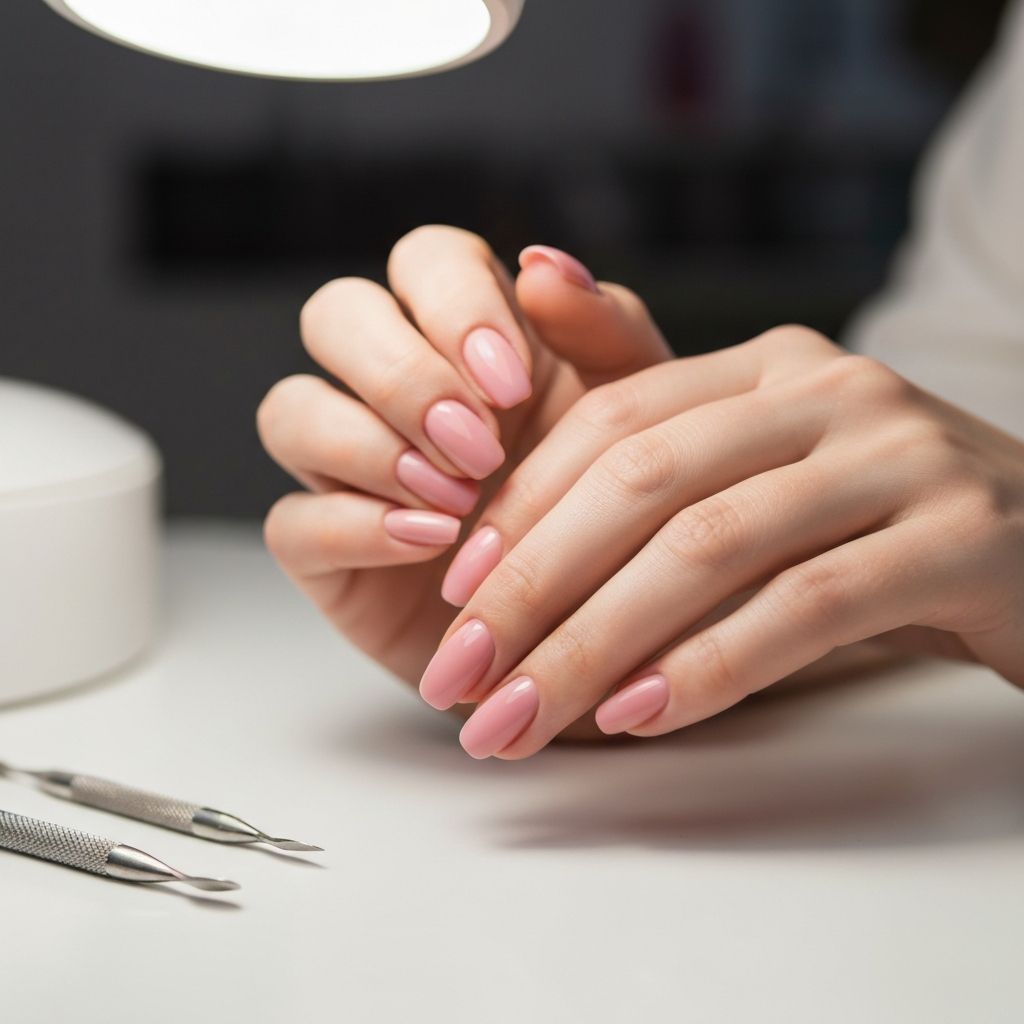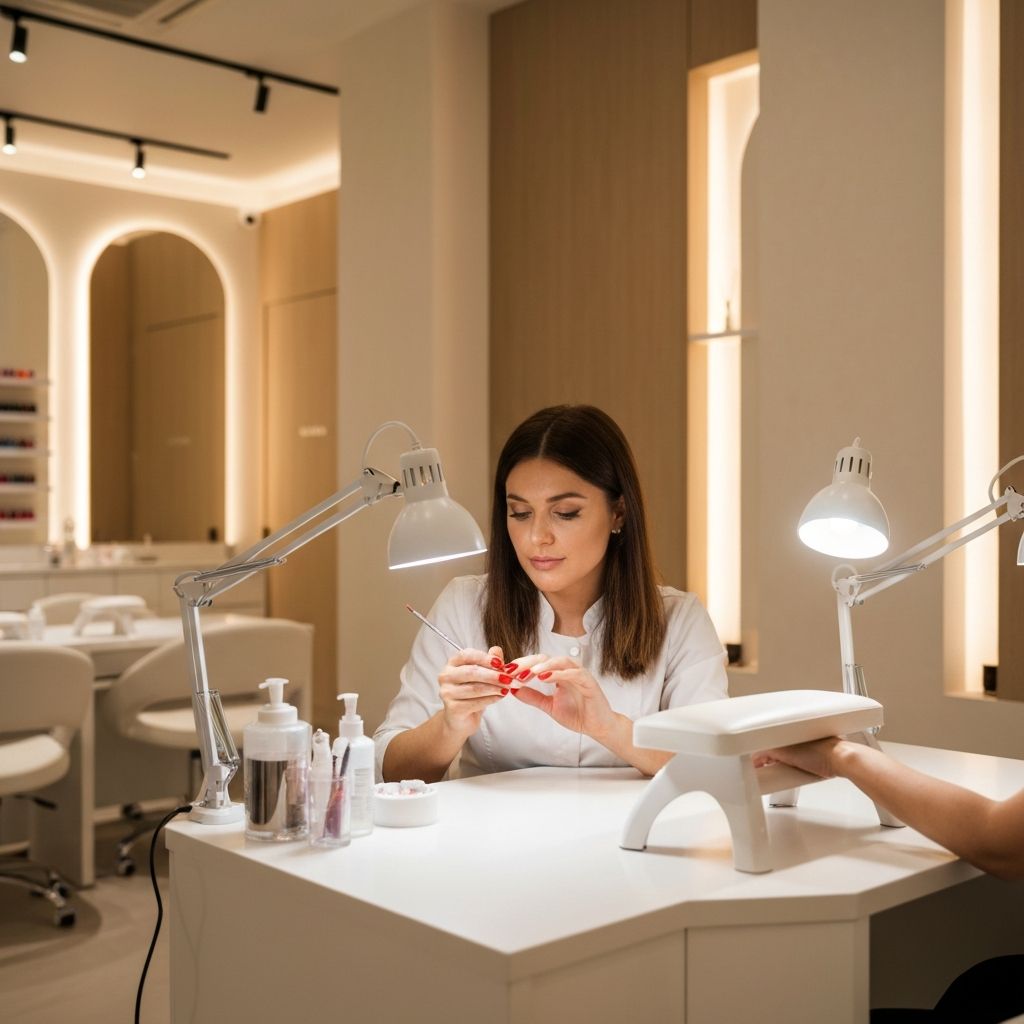
Both services can end with the same gel polish in the same colour. What separates them happens in the first hour, before any colour goes on.
The Difference Is the Cuticle Work
In a regular manicure, the cuticle area is softened — usually with water or a remover — and pushed back. It is quick, comfortable, and gentle on the surrounding skin.
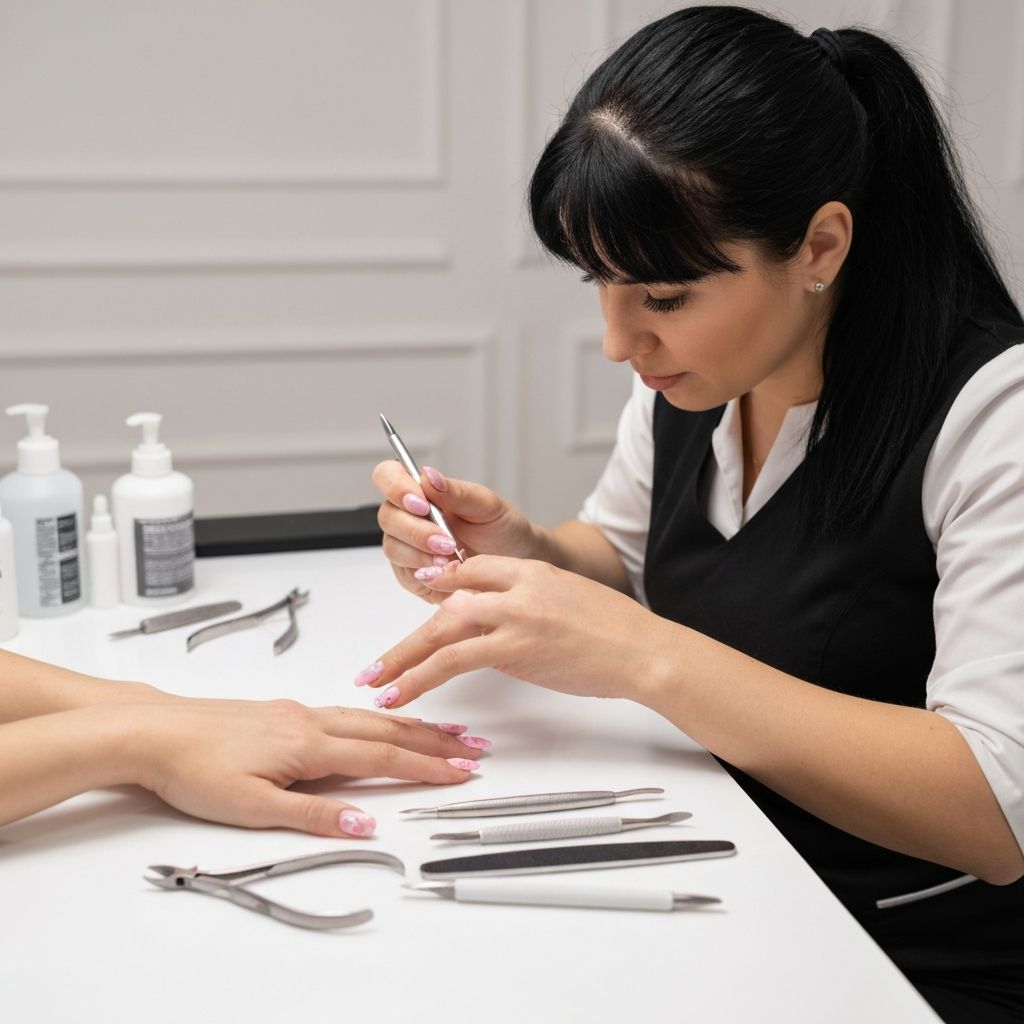
In a Russian manicure, the nail is worked dry. The technician uses a small electric file with fine bits to clean the cuticle line and the lateral folds precisely, exposing slightly more of the nail plate so product can be applied flush against the skin.
That is the whole difference. Everything else follows from it.
What It Changes in Practice
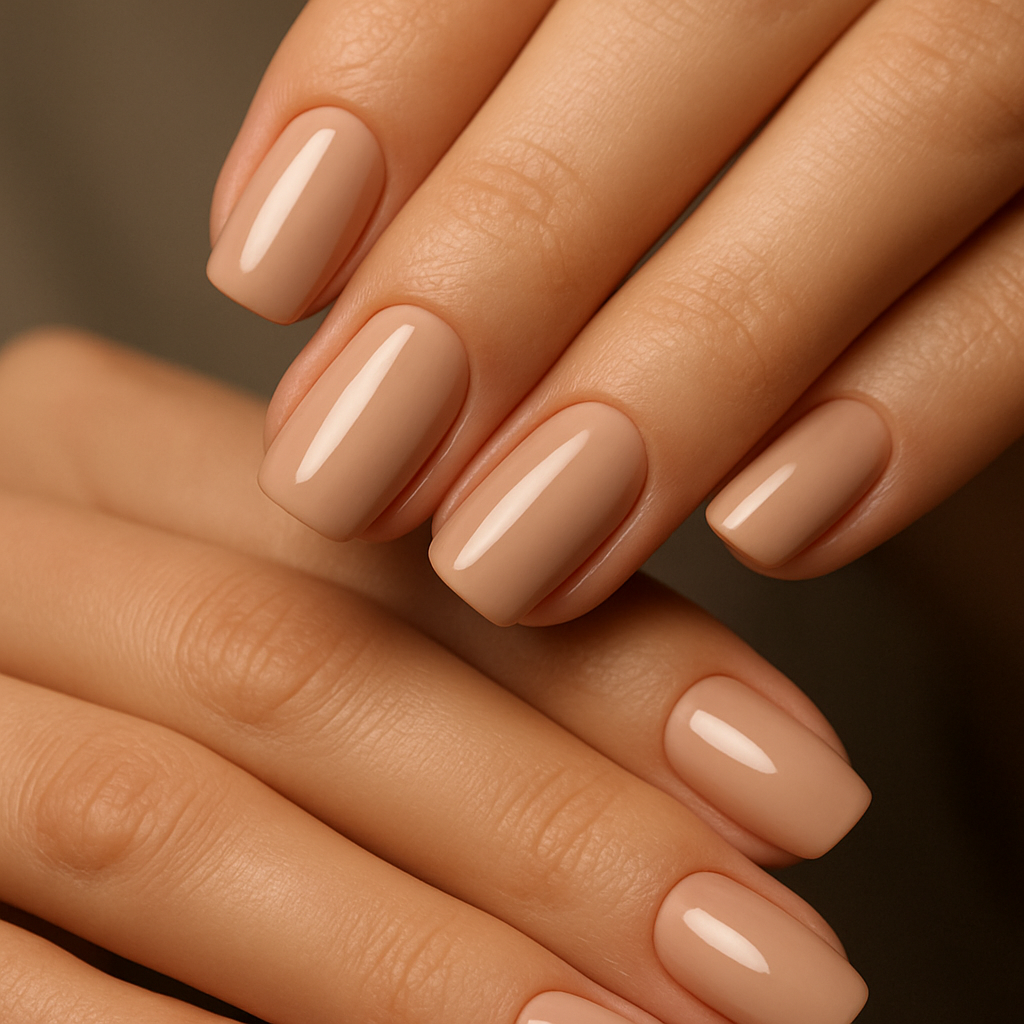
On day one: no visible gap between the polish and the cuticle. A regular gel manicure leaves a hair's width of natural nail showing; a Russian manicure does not.
As it grows: because colour starts flush at the cuticle, regrowth reads as regrowth later. Most clients get three to four weeks before it becomes obvious, against roughly two for a standard gel manicure.
How it sits: working dry lets the technician see the true cuticle line rather than a softened, swollen version of it, so the gel edge follows the natural shape of the nail.
Time and Price
| Time | Price | |
|---|---|---|
| Manicure, no polish | 45 min | $70 |
| Manicure with regular polish | 45 min | $75 |
| Russian manicure with gel | 2 h | $90 |
| Russian manicure with hard gel or BIAB | 2 h | $110 |
Two hours is genuine, not padded. The cuticle work is the slow part and it is what you are paying for — a Russian manicure delivered in forty-five minutes has not been done properly, whatever it is called on the menu.
The per-week cost is closer than the headline suggests. A $90 Russian manicure lasting three to four weeks and a $75 gel manicure lasting two work out similarly; the difference is how often you are in the chair.
Which One Should You Book?
Book a regular manicure if you want something quick, you change colour often, your cuticles are sensitive, or you are maintaining rather than resetting.
Book a Russian manicure if you want the cleanest possible finish at the cuticle, you want to stretch time between appointments, or your nails need the structure that hard gel or BIAB adds.
Add hard gel or BIAB — "builder in a bottle" — if your nails peel, bend, or break before reaching the length you want. It is a thin protective layer over the natural nail, not an extension, and it does not add length.
One Honest Caveat
The Russian technique is unforgiving. An e-file works close to living skin, and done badly it causes thinning, soreness, or in the worst case an infection. There is no shortcut around proper training.
What to check, at any salon: the technician works under magnification or very good light, bits come out of a sealed pouch, nothing hurts at any point, and you do not see dust coming off the surface of the nail plate itself. If it hurts, say so immediately.
A regular manicure carries far less of this risk, which is a legitimate reason to choose one.
Book in Midtown Miami
We are at 3250 NE 1st Ave in Midtown Miami — a few minutes from Wynwood, Edgewater and the Design District, about ten from Downtown and Brickell.
For the full picture on the Russian technique, read what it is, what it costs and how long it lasts, or see the Russian manicure service page.